AI Rap Song Generator: Write Bars, Shape Flow, Build Hooks
An AI rap song generator can turn a story idea or your own bars into a vocal demo with a beat. The difficult part is making the words sit naturally inside that beat. Start with the speaker, rhythm, and hook before adding production detail. This guide is for writers and creators building an original rap demo, not an imitation of a recognizable performer.
What is an AI rap song generator?
An AI rap song generator produces a rap recording from a musical description and, where supported, supplied lyrics. A full-song tool generates accompaniment and vocal delivery; a rap lyric generator returns text, while a beat generator may return only an instrumental. Choose the output that matches the part of the song you need to hear.
Shape rap flow before asking for a bigger beat
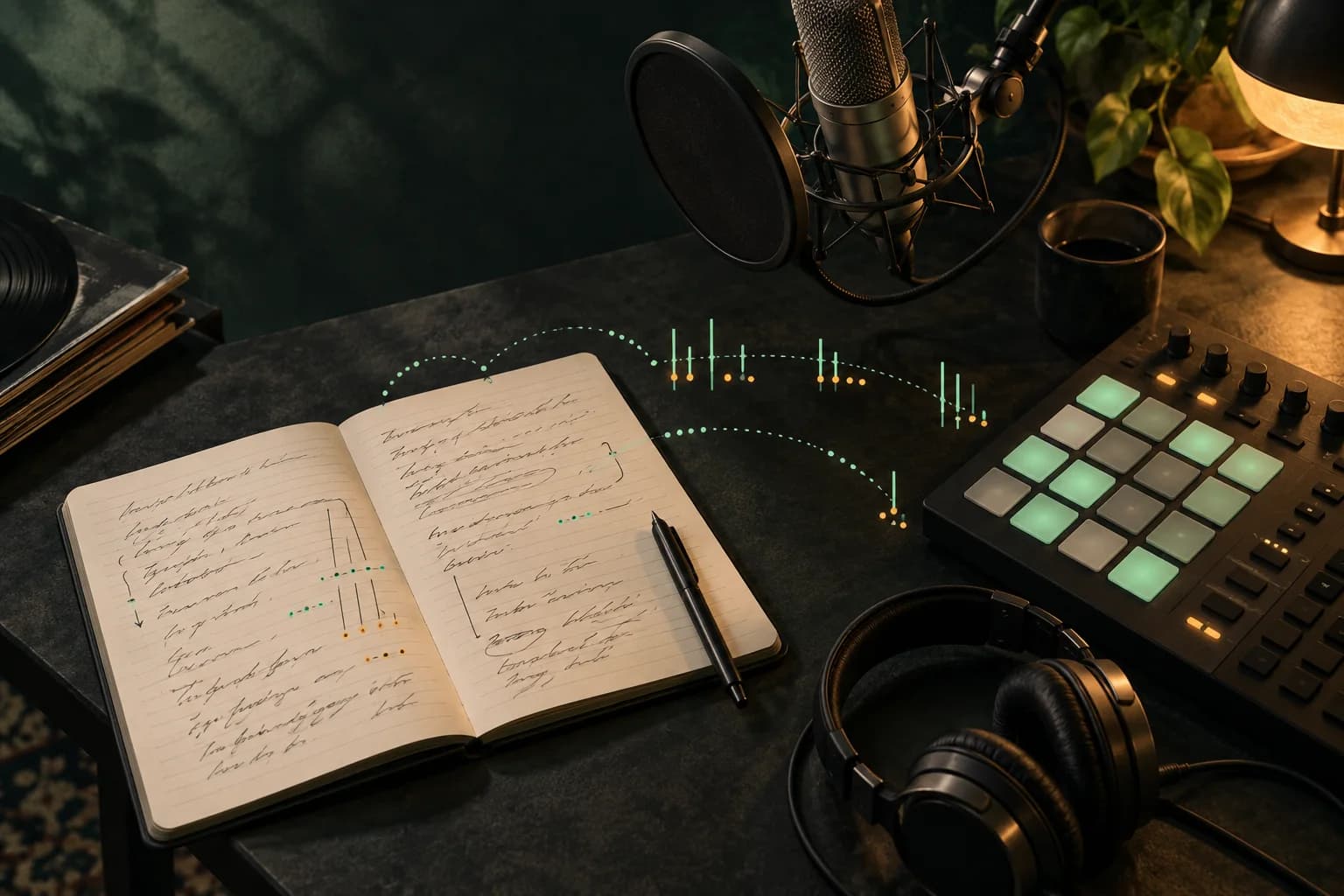
Flow is the way syllables, stresses, pauses, and rhymes move against the beat. Tempo sets a pace, but it does not decide how many words belong in a line. Two verses at the same BPM can feel very different when one leaves space after a punchline and the other fills every gap with syllables.
Read your verse aloud while tapping a steady pulse. Mark the words that carry meaning. If you rush through the setup to reach the rhyme, shorten the setup or split the thought. A line break on the page is a writing cue, not a promise that the generated voice will finish that line at a bar boundary.
Give delivery instructions that you can hear: a conversational verse, short pauses after key images, restrained ad-libs, or a chant-like hook. Asking for fast rap and slow, spacious phrasing in the same passage creates a conflict. Choose one main delivery for each section, then let the hook supply a clear contrast.
The 2021 DeepRapper paper by Xue and colleagues treats rhyme and rhythm as separate modeling concerns. It is a useful reason to review both the words and their timing. That research does not describe MusicGPT's underlying model.
Write original bars with a story and a repeatable hook
A useful rap verse has a specific speaker and something happening. Instead of asking for a song about success, describe a night-shift worker making a first demo after the last bus leaves. Concrete objects give the verse material that a generic list of motivational slogans cannot supply. The following lines are an original writing exercise, not a transcript of generated audio.
[Verse] Last bus gone, I walk home in the rain Work shoes squeak by the all-night train Phone screen cracked, but the demo still plays One small chorus gets me through these days [Chorus] Keep that light on, I am coming through One more verse till the morning turns blue
The opening pair uses rain and train as an end rhyme; the next pair connects plays and days. Those simple pairs leave attention available for the story. Internal rhyme can add motion inside a line, but stacking rhymes everywhere may make the meaning harder to follow. Change the words when a rhyme forces the narrator to say something implausible.
The hook repeats one emotional idea rather than summarizing every event. Read it without the verse: it should still make sense. For an initial draft, try two short hook lines that can repeat, then a verse that explains why those lines matter. Section labels help communicate that plan, but exact repeats and section lengths still need an audio check.
AI rap song generator prompts for three different deliveries
A rap prompt needs more than a subgenre label. Specify the narrator, drum feel, bass role, vocal delivery, and difference between verse and hook. These three illustrative briefs use different musical decisions. Their BPM values are creative targets, not measured results or guarantees of exact tempo, rhythm, or arrangement.
Boom bap: give a story room to land
English storytelling rap about walking home after a night shift. Target 88 BPM, dry kick and snare, warm bass, sparse electric piano. Conversational rapped verses with short pauses after important images. A two-line spoken hook with light backing responses. Keep the lead voice clear and the arrangement restrained.
The sparse piano and dry drums create a brief with fewer competing accents. Choose this direction when the words carry the main interest. If the result becomes a sung ballad, make the rhythmic spoken delivery explicit rather than adding more instruments.
Trap: separate the pulse from the vocal speed
Original English trap rap about finishing a first demo before sunrise. Target 140 BPM with a relaxed half-time feel, controlled 808 bass, crisp hi-hats, and a dark plucked motif. Measured verse delivery, occasional short faster phrases, and a simple repeated hook. Keep the bass from masking the consonants.
A faster tempo label does not require every lyric to move quickly. The half-time request describes a slower perceived groove. Listen for whether the verse remains understandable and whether the bass hides words on smaller speakers; dense hi-hats alone do not make the flow interesting.
Melodic rap: reserve the melody for the hook
Reflective English melodic rap about sending a demo to an old friend. Medium-slow pace, warm keyboard chords, rounded bass, understated drums. Intimate rhythmic verses and a short sung hook that rises gently. Clear pronunciation, minimal ad-libs, and a quiet ending. Do not turn every verse line into a long melody.
This brief assigns different roles to rapping and singing. If the whole track becomes melodic, request a stronger spoken rhythm in the verse. If the hook feels crowded, shorten its text before asking for a larger arrangement.
Fix rushed words, flat cadence, and a weak hook
Review the verse and hook separately. First listen without reading the lyrics, then compare the recording with your draft. Use the same playback level when comparing candidates. Save any version with a useful passage before generating again, because a revised prompt can change the entire performance rather than repair one exact bar.
| What you hear | What to change | What to listen for |
|---|---|---|
| The last words sound rushed | Remove a filler phrase or split the line. Ask for a pause before the next idea. | The final rhyme is understandable without reading along. |
| Every line has the same cadence | Alternate shorter and longer phrases, or request a pause after the key image. | The verse has movement while the story stays easy to follow. |
| The hook disappears into the verse | Use fewer hook words and request one contrast, such as backing responses or a sung phrase. | You can identify the hook on the first listen. |
| The beat covers the voice | Request a quieter bass role, fewer bright percussion accents, and less competing melody. | The important consonants remain clear on headphones and a phone speaker. |
Make a rap demo in MusicGPT with your own lyrics
Use MusicGPT to try the musical direction, or open MusicGPT Studio for the full controls. Keep this ai rap song generator guide beside your draft while you decide what the verse and hook should do.
Set the music direction
Paste one of the briefs above into the description and replace its story with your own. Keep Instrumental only off for a vocal rap. Avoid requests to copy a named performer's voice or a recognizable song.
Choose who writes the words
Turn Write lyrics for me off to use your own verse and hook in Lyrics. Turn it on when you want a draft from the description. If words are the missing piece, start with the AI Lyrics Generator.
Preview, save, and compare
Sign in, generate, and listen before downloading. Use MP3 for a convenient preview or WAV for an editing workflow. A rendered download does not provide separate vocal and drum stems or exact control over each syllable.
Keep the prompt and lyrics with the file you choose. A request for a fixed number of bars, exact BPM, or a specific rhyme pattern is a direction to evaluate, not an enforced production setting. If one word is mispronounced, simplify its spelling or surrounding phrase and compare a fresh candidate.
Review the whole rap recording before release
Listen for accidental extra words, repetition, unclear names, and abrupt transitions. Check that the story is still yours and that any lyrics, audio, or samples you supply are material you can use. These examples contain newly written words; they do not establish permission for other source material.
Check current MusicGPT plan conditions, the copyright and commercial-use guide, and MusicGPT terms for your intended release. A plan's commercial-use permission does not resolve third-party rights in supplied material or guarantee copyright protection under applicable law.
AI rap song generator FAQ
Can an AI rap song generator use my own lyrics?
Yes, if the tool supports custom lyrics. In MusicGPT, switch off Instrumental only and Write lyrics for me, then paste your words into Lyrics. Put the beat and delivery description in the music prompt. Listen for changed words, pronunciation errors, and unexpected repetition before using the recording.
How do I get better flow from an AI rap generator?
Read the verse aloud over a steady pulse, shorten lines that feel rushed, and describe the delivery with audible instructions. Use pauses, shorter phrases, or a contrast between verse and hook. A BPM request alone does not control syllable placement, and a new generation may change other parts of the track.
What is the difference between a rap lyric generator and a rap song generator?
A rap lyric generator produces words that you still need to perform or turn into audio. A rap song generator produces a recording, which may include vocals and accompaniment. A beat-only tool supplies an instrumental. Check the output type before choosing a workflow, especially if you need a vocal demo.
Can I try AI rap generation for free?
MusicGPT offers a free plan with a limited generation allowance. Check the current pricing page before starting, because credits and plan conditions determine how many attempts you can make. Permission to generate a demo and permission for commercial use are separate; review the applicable plan and terms before release.